Understand the fundamentals
Damage is not always visible
Electrostatic discharge, or ESD, is a sudden flow of static electricity from one object to another. It is the same effect as the small shock you can feel after walking across a carpet. A discharge too small for you to feel can still damage sensitive electronic parts. A board may fail right away. Or it may develop a problem later that is hard to link back to how it was handled.
Protection starts with the approved work area, the right packaging and trained handling. Follow the site’s ESD procedure and the equipment instructions. In ESD control, grounding is a connection that lets static charge drain away safely. Do not make your own grounding connections. Do not assume an ESD accessory makes it safe to work on energized equipment. Protecting electronics from static is not the same as protecting you from electric shock.
Recognize an ESD wrist strap
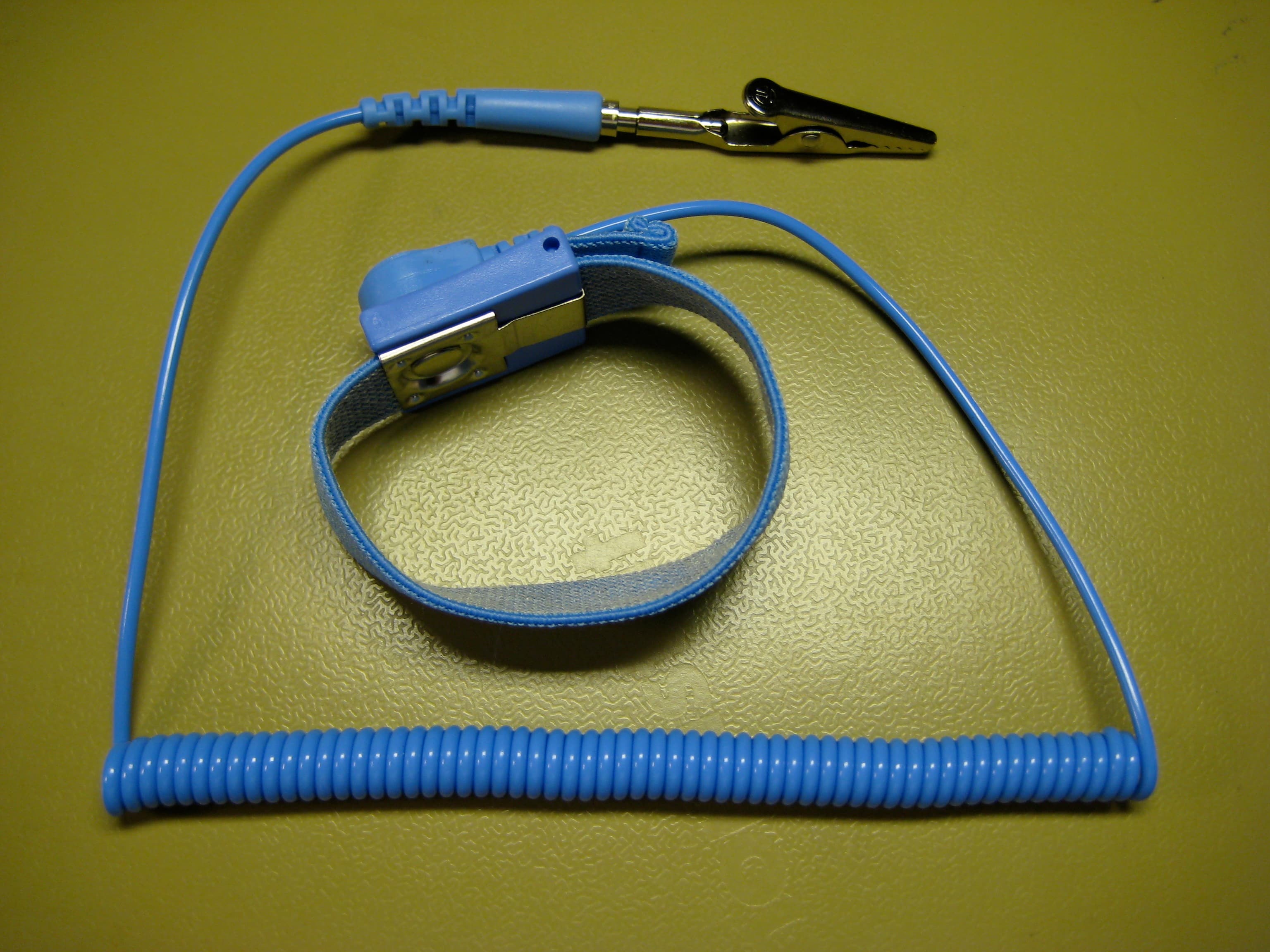
The band is worn on the wrist. It works with the coiled lead and clip as part of an ESD-control system. That system protects sensitive electronics from static discharge. Use only the site’s approved, tested system. An ESD strap does not protect you from electric shock.

See how it works
Treat connectors and boards as functional parts
Connector pins, metal contact surfaces and component leads (the thin metal legs on parts) are not handles. Do not touch contacts or pull on wires. Do not set boards down on just any surface nearby. Support equipment by its designated handling points, and use its packaging. Each model has its own removal procedure, which sets the order of steps and any tools needed.
Dust, moisture, metal fragments and leftover residue are all contamination: unwanted material that can affect cooling or electrical behavior. Cleaning is a controlled maintenance task. The approved method must suit the material and the equipment. A household cleaner, a high-pressure air stream or a solvent (a chemical that dissolves dirt) may remove visible dirt. That alone does not make it the right method.
Connect it to the field
Make the handoff traceable
Before an authorized part exchange, keep a record of the equipment and part identifiers, such as serial numbers. Keep suspect parts, tested parts and ready-to-use parts clearly separated. A suspect part is one that might be faulty. If an unlabeled board moves between benches, later technicians may not know where it came from. They may also lose track of its revision (design version) and fault history.
Imagine you receive two control boards that look identical. One is known-good, meaning it has been tested and works. The other is a suspect part that is still waiting to be checked. Packaging and status labels prevent a mix-up that could lead to a false troubleshooting result. Careful handling protects the part’s history and records, not just the physical part.
Terms used in this lesson
- ESD
- Electrostatic discharge: a sudden flow of static electricity that can damage electronic parts.
- Handling protection
- Approved packaging and work areas that protect parts while they are moved or serviced.
- Mechanical protection
- Supporting equipment so its weight does not strain connectors, cables or exposed components.
Optional references & further reading
Use current manufacturer instructions for the exact equipment and your site’s approved procedures. Course levels do not grant task authorization.