Understand the fundamentals
Hydro moves heat through a liquid circuit
In a hydro-cooled miner, a liquid called coolant flows through built-in cooling parts such as cold plates. The coolant picks up heat and carries it to other equipment. Pumps keep the liquid moving. A heat exchanger passes heat from one liquid loop to another, or from liquid to air, without mixing them. Finally, equipment outside the miner releases the heat to the environment.
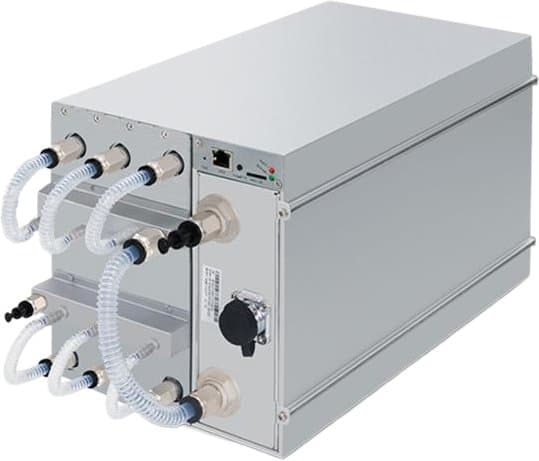
Each system has its own rules for the type of fluid, the allowed operating conditions and how parts connect. Follow the documents for that exact system. “Water-cooled” does not mean any water will do. The coolant’s chemistry, how clean it is and whether it suits the pipes and seals all matter. Getting any of these wrong can cause corrosion (metal being eaten away), buildup inside the system and early failures.
See how it works
Immersion surrounds suitable equipment with fluid
Immersion cooling places suitable equipment into a dielectric fluid made for this use. Dielectric means the fluid insulates against electricity under its specified conditions. That does not mean every liquid is safe, or that the fluid is safe to handle in any way. The system still needs an approved way to move the fluid and reject the heat.
Do not assume a miner built for one cooling type can be used with another. The materials, seals, fans, firmware and service methods may differ. The same goes for mixing fluids. Use only the approved fluid and procedure, and never judge a fluid by its color.
ASIC equipment in an immersion tank
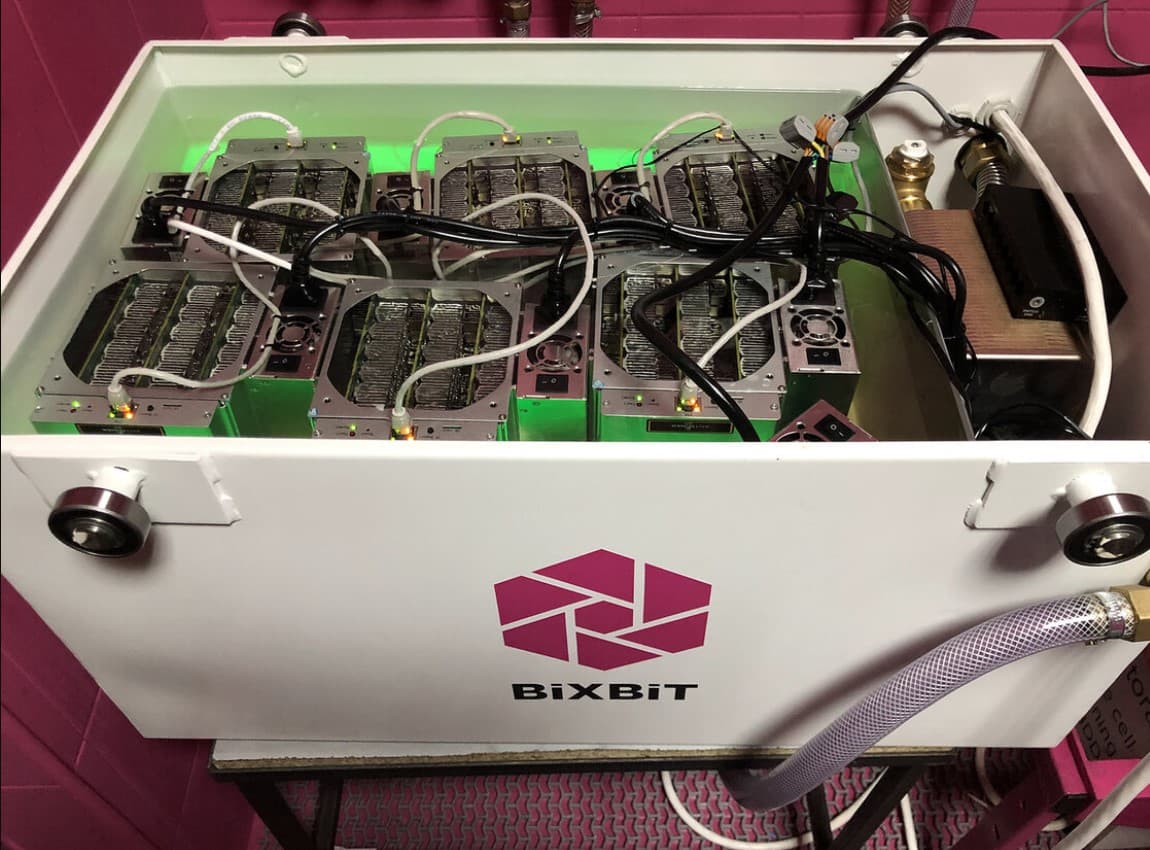
Several mining assemblies share a dielectric-fluid bath. Heat must still leave the tank through a complete cooling system. This arrangement differs from cold plates attached to chips; equipment and fluid compatibility are specific to the system.
Image credits
Stealth2021 · Source · CC BY-SA 4.0
Unmodified image, displayed at a reduced size.

| Arrangement | Heat-transfer path | What it needs |
|---|---|---|
| Air | Chip → heatsink → moving air | Clear intake/exhaust path |
| Hydro | Chip → cold plate → circulating coolant | Approved fluid, flow and heat rejection |
| Immersion | Equipment → dielectric fluid → cooling system | Compatible equipment/fluid and heat rejection |
Connect it to the field
Understand readings without opening the system
Inlet temperature is measured where the coolant goes in. Outlet temperature is measured where it comes out. The gap between them depends on how much heat is added, how fast the coolant flows and where the sensors sit. A large gap alone does not prove a pump problem. A small gap alone does not prove the cooling is good enough. What pressure and flow readings mean also depends on the exact model.
Report an unexpected leak, or a pressure or temperature alarm, and follow the site’s controlled response. Do not open pressurized connections to investigate. You can help by recording the cooling type, the alarm, the affected equipment and the times. Authorized personnel manage the physical system.
Terms used in this lesson
- Cold plate
- A metal plate with coolant flowing inside it. It takes heat from the parts it touches.
- Immersion
- Cooling by placing suitable equipment in a dielectric fluid, which insulates against electricity under its specified conditions.
- Heat exchanger
- Moves heat from one fluid to another, such as liquid to air, without mixing them.
Optional references & further reading
Use current manufacturer instructions for the exact equipment and your site’s approved procedures. Course levels do not grant task authorization.